





Description
WHAT IS THIS PRODUCT?
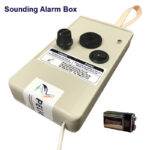
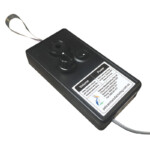
The Stand Up Alarm Spare Alarm Boxes are available for our range of patient monitoring Stand Up Alarms. We supply these to help reduce customer costs by offering individual replacement parts, which may prevent the need to purchase an entirely new alarm.
Note: Not all Alarm Boxes are compatible with all alarms, so please ensure you select the correct option from the list below.
Alarm Box – Pressure Off, suitable for:
Alarm Box – Pressure On, suitable for:
WHO IS THIS PRODUCT SUITABLE FOR?
The Stand Up Alarm Spare Alarm Boxes are suitable for people who use Pelican Stand Up Alarms and require a replacement alarm box.
BRIEF INSTRUCTIONS FOR USE
The Stand Up Alarm Spare Alarm Boxes can be easily plugged in and are ready for use.
WHAT IS THIS PRODUCT MADE FROM?
Electrical components.
Technical
STOCK KEEPING UNIT (SKU), SIZE, WEIGHT, GLOBAL TRADE ITEM NUMBER (GTIN)
| SKU | DETAILS | WEIGHT | GTIN |
| 444-A-P-OFF | Alarm Box – Pressure Off | 0.2kg / 0.5lbs | 9349145007200 |
| 444-A-P-ON | Alarm Box – Pressure On | 0.2kg / 0.5lbs | 9349145007217 |
GLOBAL MEDICAL DEVICE NUMBER (GMDN)
12585
Cleaning
CLEANING METHOD
Wipe clean.
MAXIMUM WASHING TEMPERATURE
N/A
DETERGENT
Use a mild hospital grade disinfectant.
DRYING METHOD
Air dry in the shade.
CLEANING WARNING
Only use and store the product when it is dry. Test your cleaning chemicals on a discreet area to make sure it will not damage the material.
Important
Warranty: All Sounding Alarm Boxes have a 12 month repair or replacement warranty.
FAQ's
Choosing Between Wired and Wireless Alarms
HOW DOES THE ALARM WORK?
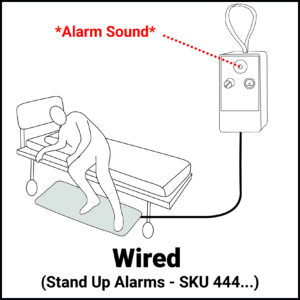
🔌 Wired: Each alarm pad plugs into an Alarm Box or Nurse Call System with a wired cable. The alarm noise can come directly from the Alarm Box, or alert through a facility’s Nurse Call System.
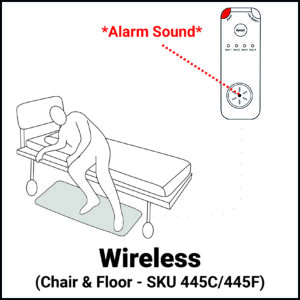
📶 Wireless: Each alarm pad plugs into a Transmitter. When the alarm is activated, the Transmitter sends a wireless signal to the Receiver which makes an alarm noise, or alerts a facility’s Nurse Call System.
IS INSTALLATION COMPLICATED?
🔌 Wired: Simple plug-and-play setup with no pairing required.
📶 Wireless: Requires initial pairing between the Transmitter and Receiver.
WHAT SET-UP OPTIONS ARE AVAILABLE?
🔌 Wired: Each pad generally needs its own sounding Alarm Box or Nurse Call Plug attachment. However, if using two alarm pads in close proximity (eg. a Stand Up Floor Alarm on either side of a bed), a Y-Connector can be used to run two pads into a single Alarm Box or Nurse Call Plug. One pad cannot be plugged into multiple Alarm Boxes.
📶 Wireless: Multiple pairing options are available. For example, up to four alarm pads can be paired to one Receiver, or one alarm pad can sound through multiple Receivers.
WHICH TYPE HAS THE LONGEST RANGE?
🔌 Wired: Limited by the length of the cable, although 10m/33ft Stand Up Alarm Extension Cords are available to increase the distance between the pad and the Alarm Box.
📶 Wireless: Allows greater freedom of placement, with the Receiver able to be located elsewhere in the home or facility without needing to use cables. Maximum range is approx. 50 metres / 165 feet.
WHICH TYPE HAS FEWER TRIP HAZARDS?
🔌 Wired: Cables may create a trip hazard if not routed carefully. Alarms come with a sign to alert carers and staff that an alarm is in place.
📶 Wireless: No cable between the Transmitter and Receiver means tripping hazards are reduced.
WHICH TYPE IS MORE RELIABLE?
🔌 Wired: Direct wired connection with no wireless signal involved generally experiences fewer false alarms caused by signal interference.
📶 Wireless: Uses a wireless connection, allowing flexible placement. Walls, metal objects, and other environmental factors may weaken the strength of the wireless signal.
WHAT ARE THE BATTERY REQUIREMENTS?
🔌 Wired: Powered by a 9V battery in the alarm box. Nurse Call Plug versions do not require batteries and plug into wall power outlet.
📶 Wireless: Requires two alkaline batteries in both the Transmitter (AAA) and Receiver (AA). An optional power adaptor is available for the Receiver only.
WHICH TYPE REQUIRES LESS MAINTENANCE?
🔌 Wired: Fewer electronic components to monitor. The alarm should be tested regularly to ensure it is working properly.
📶 Wireless: Batteries should be checked and replaced periodically. The alarm should also be tested regularly to ensure it is working properly.
CAN THE INTERNAL CONTACT SHEETS BE REPLACED?
🔌 Wired: Replacement contact sheets are available if the original contact sheet becomes damaged or stops working. All alarm pads work with internal contact sheets that wear down with use.
📶 Wireless: Wireless alarm pads cannot be opened to replace contact sheets. If internal contact sheets break or the short cable that connects the pad to the Transmitter is damaged, a new pad will need to be purchased.
WHICH TYPE IS BETTER FOR SHARED ROOMS?
🔌 Wired: Alarm sounds directly at the bed or chair location, unless it is plugged into a Nurse Call System or a Stand Up Alarm Extension Cord is being used.
📶 Wireless: Receiver can be placed with a caregiver, at a nursing station, or in another room. The Receiver can also be plugged into a Nurse Call System.
WHO SHOULD CHOOSE A WIRED OR WIRELESS ALARM?
🔌 Wired: Ideal for users who want a simple solution and are comfortable with a cable connection.
📶 Wireless: Ideal for users who want greater flexibility, reduced cable clutter, or remote notification capability.
Alternative & Related Products
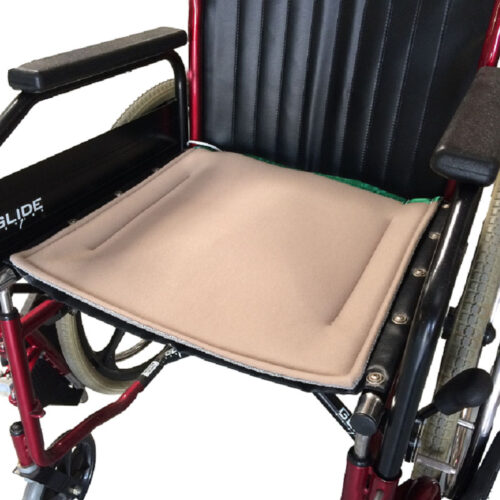

Stand Up Chair Alarm
To alert when a patient stands up from wheelchair or chair.
From AUD $306.00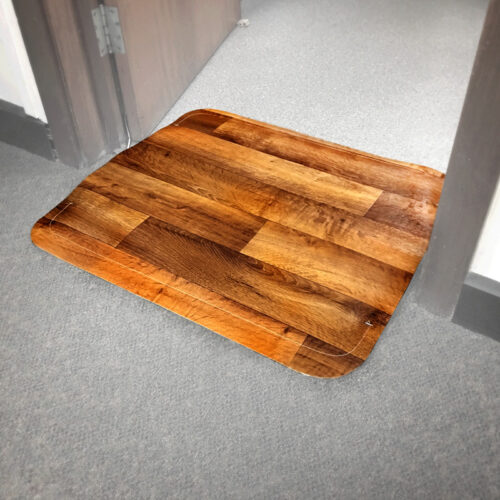

Stand Up Doorway Alarm
Alerts carers when a patient has stood on mat.
From AUD $346.00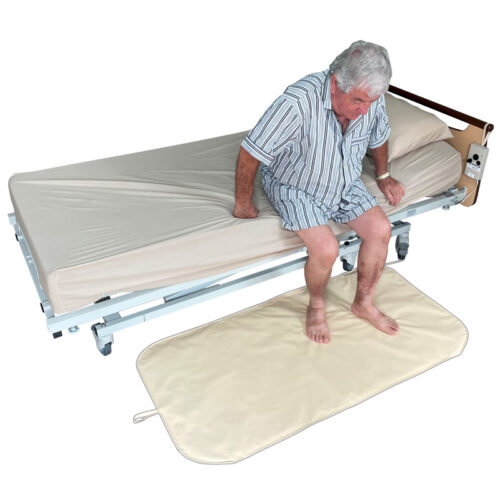

Stand Up Floor Alarm
Alerts carers when a patient has stood on mat.
From AUD $324.00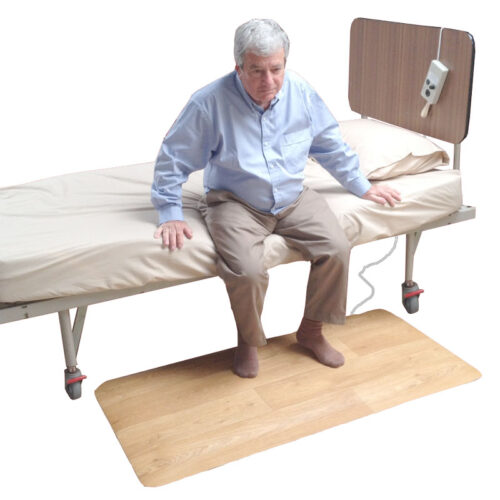

Stand Up Floor Alarm – Lino
Alerts carers when a patient has stood on mat.
From AUD $319.00