







Description
WHAT IS THIS PRODUCT?
The Chair/Lap Belt Shoulder Strap is an accessory designed to be used in conjunction with the Pelican Chair Belt or Lap Belt (both sold separately) to provide additional upper-body postural support while seated.
WHO IS THIS PRODUCT SUITABLE FOR?
This product is intended to assist with seated balance in people who require additional postural support when using a lap-type positioning belt. It is not intended to function as a standalone restraint and should always be used in conjunction with an appropriate pelvic positioning device under clinical supervision.
BRIEF INSTRUCTIONS FOR USE
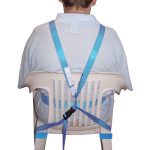
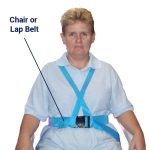
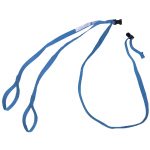
The loops at the ends of the two long straps are attached to the front of the Chair Belt or Lap Belt. The straps may be positioned over the shoulders like braces or crossed over the chest, depending on the user’s postural requirements.
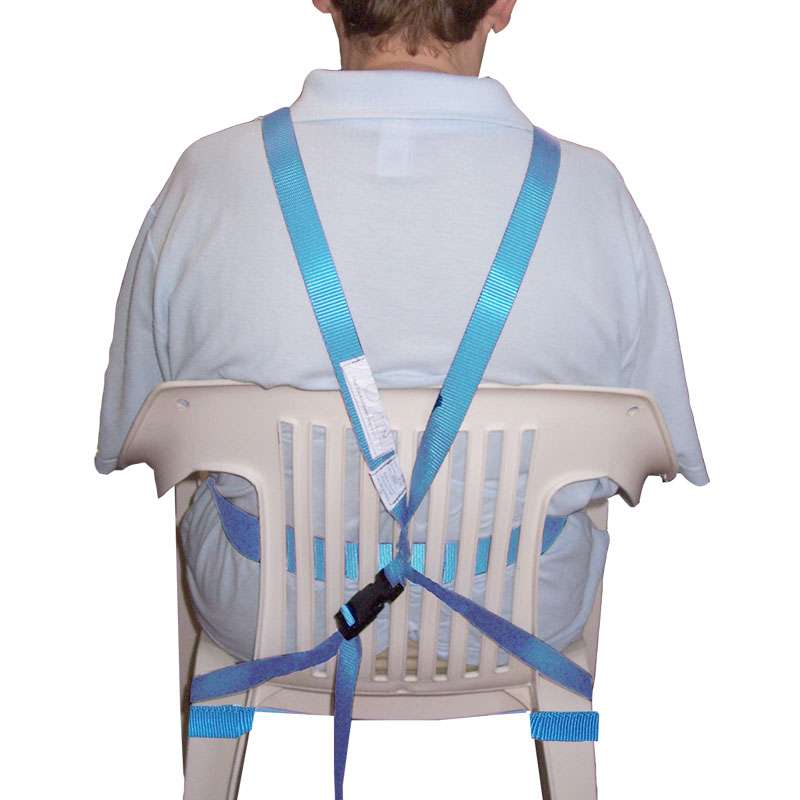
The single long strap with the male buckle is routed down the back of the chair, around one rear leg, across to the opposite rear leg, and then returned upward to connect with the female buckle component. Adjust all straps to achieve a secure but comfortable fit, ensuring the user retains the ability to lean slightly forward without being restricted in an unsafe manner.
Straps may be positioned under clothing if required. This product is generally best suited to low-back chairs.
For users with higher levels of movement or postural need, alternative products such as the Safety Vest Crossover or Posture Pinnie (both sold separately) may be more appropriate.
WHAT IS THIS PRODUCT MADE FROM?
Webbing, plastic buckles.
GENERAL PUBLIC RESTRAINT OR POSITIONING DEVICE AUTHORISATION LETTER
- If this product is for use in a private home, we require authorisation from a suitable person. This is to ensure it will be used correctly and safely by the family and/or carers, and that using it will not be dangerous. Examples of a suitable person who is able to sign the letter are: Occupational therapist; Physiotherapist; Clinical Nurse Manager; Registered Nurse; Doctor; or another suitably qualified person.
- If this product is for use in a care facility such as a hospital or aged care facility, then this letter is not required, because their staff are already trained in safe restraint use.
- Note: We are unable to sell this product to the USA.
Technical
STOCK KEEPING UNIT (SKU)
410
SIZE
173cm / 68″
WEIGHT
0.2kg / 0.44lbs
GLOBAL MEDICAL DEVICE NUMBER (GMDN)
35305
GLOBAL TRADE ITEM NUMBER (GTIN)
9349145006838
Cleaning
CLEANING METHOD – SEWN VERSION
Machine or hand wash.
MAXIMUM WASHING TEMPERATURE
80°C / 176°F.
DETERGENT
Use a mild detergent. Do not use fabric softener.
DRYING METHOD
Air dry in the shade. Alternatively, tumble dry on a cool temperature and make sure the drum is cool.
CLEANING WARNING
Only use and store the product when it is dry.
Important
Restraints are a prescribed item. Care Facilities such as Hospitals, Nursing Homes, Aged Care Facilities etc., may order this item. For private sales to a family member, written authorisation is needed from a qualified therapist or medical doctor, approving the use of the correct Restraint for the patient’s current condition. Remember if the patient’s condition changes, then a different type of Restraint may be required. It is necessary to ensure the family are aware of the proper use of Restraints, as these can be dangerous if not used correctly.
General Manual Handling Warning: Manual Handling products are designed to assist carers to help patients. They will not make the carer stronger or fitter, but with correct training and use of the products, should make manual handling easier and safer for both staff and patients. When training, practise with an able-bodied colleague. If any procedure is not comfortable or is difficult and puts the carer or patient in a dangerous position, the participants should call out to stop the manoeuvre, recover and recommence. Never jeopardise your health by straining, twisting or being incorrectly positioned when manual handling. Always select the most appropriate equipment for the patient’s current condition and if in doubt, use mechanical equipment. Ask your Manual Handling adviser for individual guidance.
Correct Buckle Threading: Click here to view a video showing the correct way to thread a buckle onto the webbing. It is vital that the buckles on this product are correctly fitted. Contact us if you need to order a replacement buckle if one is broken.
Alternative & Related Products
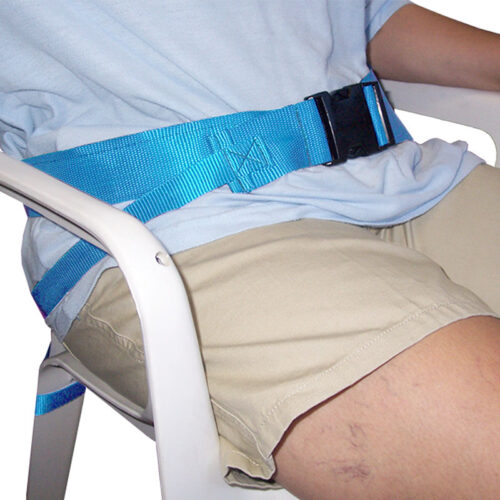
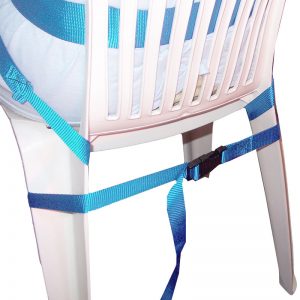
Chair Belt
Used as positioning device to help a patient in a chair.
AUD $55.00 + 10% US Tariff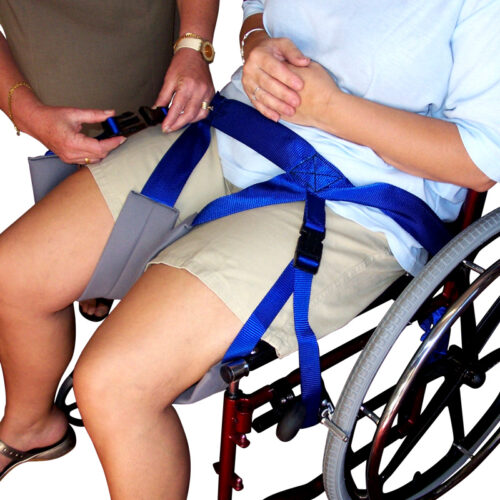

Chair Belt for Sliders – Front Fastening
Helps prevent people from sliding down chairs to floor.
AUD $79.00 + 10% US Tariff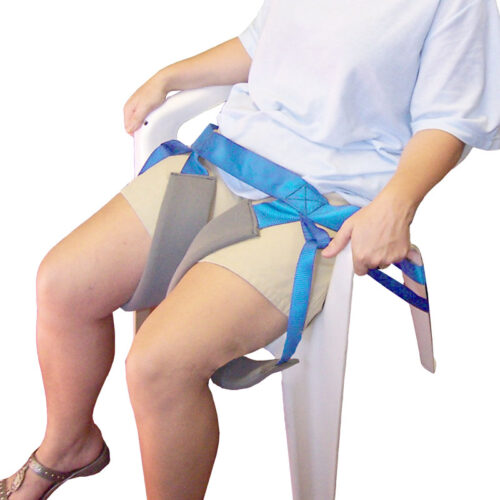

Chair Belt for Sliders – Rear Fastening
Helps prevent people from sliding down chairs to floor.
AUD $79.00 + 10% US Tariff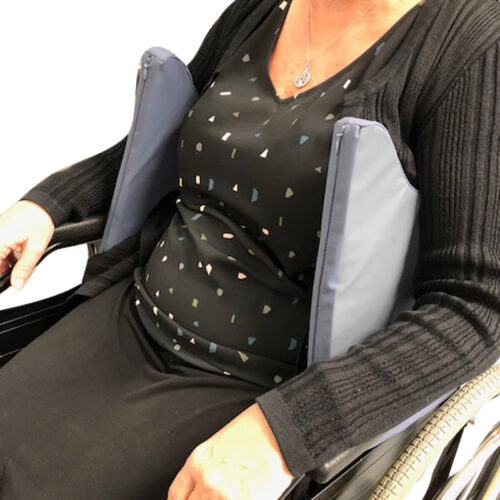
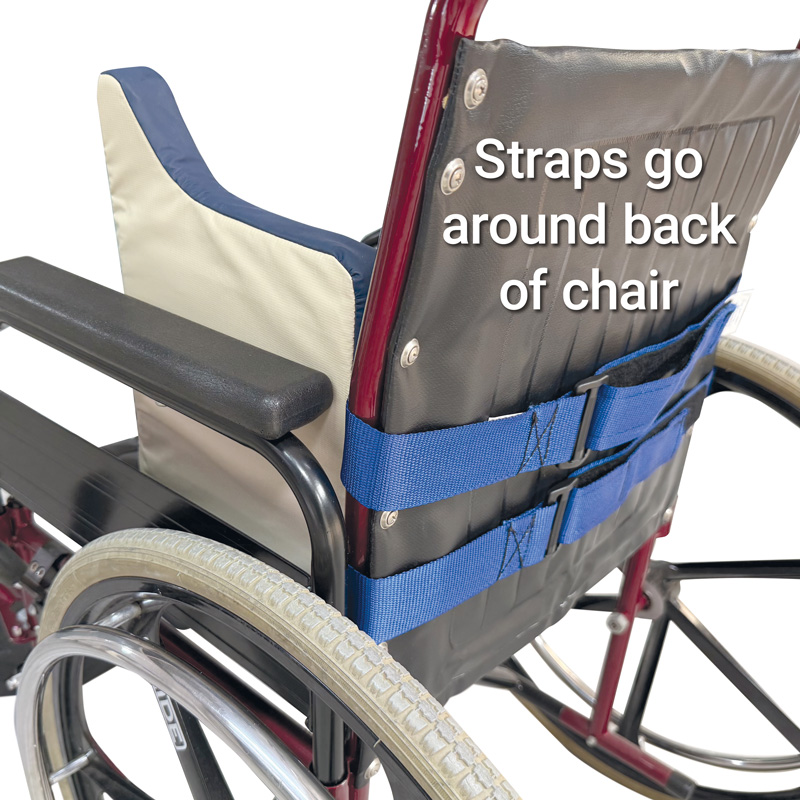
Chair Lateral Supports
Helps stop people leaning forward or to the side.
AUD $195.00 + 10% US Tariff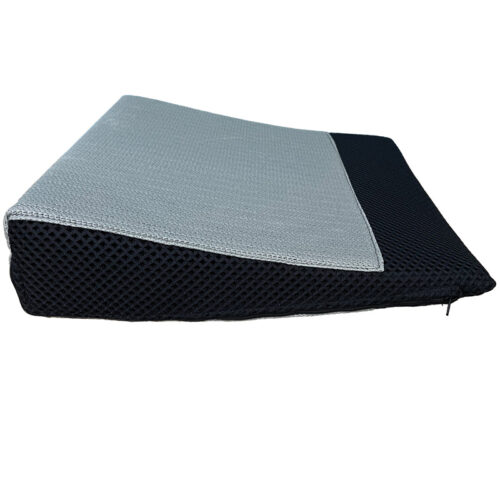
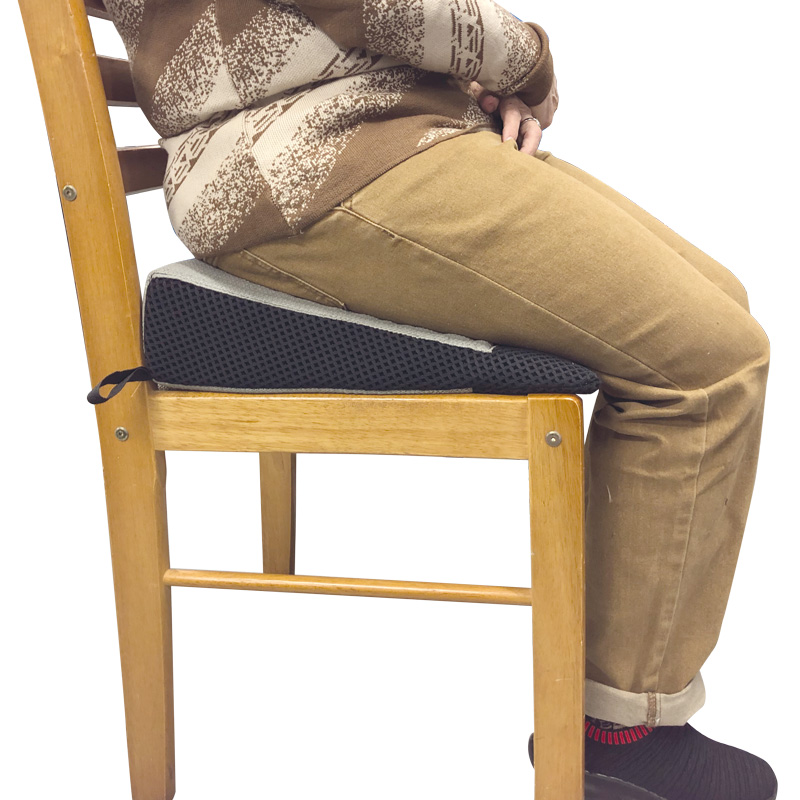
Chair Wedge – Hip Replacement – Anti-Slide
Ensures that knees are lower than hips when sitting.
AUD $138.00 + 10% US Tariff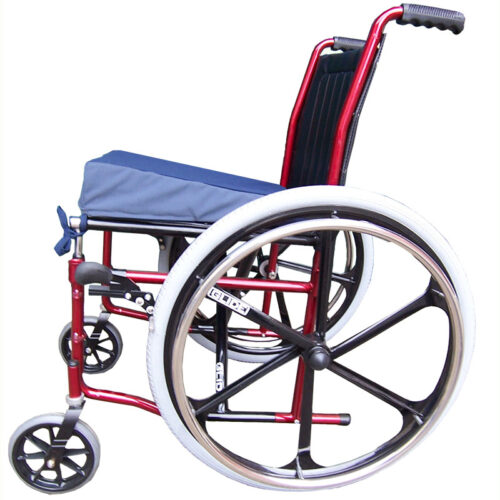

Chair Wedge Anti-Slide
A non-restraint product to help prevent sliding off chairs.
AUD $131.00 + 10% US Tariff

Non-Slide Chair Pad
Helps prevent people from sliding down chairs.
AUD $58.00 + 10% US Tariff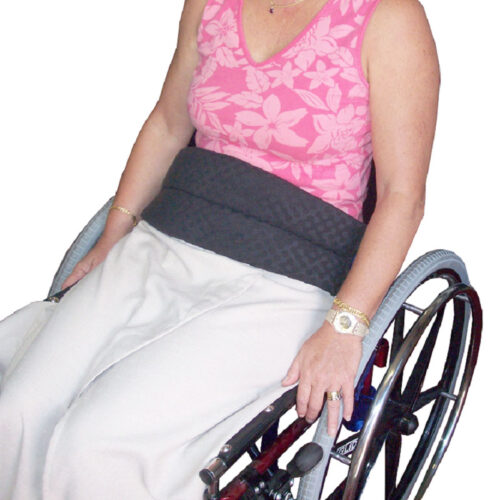

Soft Belt
Wide padded section to provide soft area against body.
AUD $95.00 + 10% US Tariff