




Description
WHAT IS THIS PRODUCT?
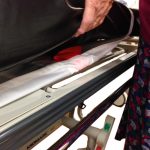
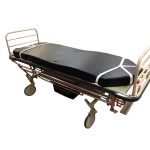
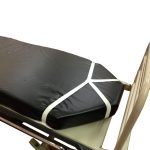
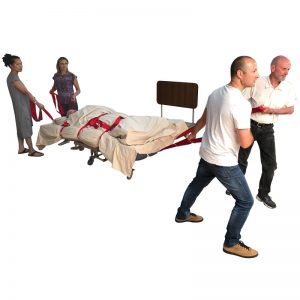
This product is designed to assist in the evacuation of people who are unable to quickly leave a building during an emergency. It is stored beneath the mattress so it is readily available when required.
Common names for this type of product include Fire Rescue Sheet, Fire Blanket, Fire Sheet, Ski Sheet, and Evacuation Sheet.
People may be transferred down stairs or along evacuation routes using this system.
Before ordering, please review the full range of ResQ products listed at the bottom of this page to ensure you select the most appropriate product for your needs. If you require assistance, please contact us.
Key features of this product include:
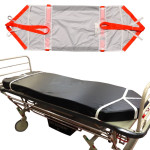
- Designed specifically for narrow trolley beds
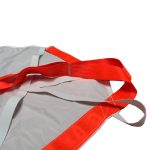
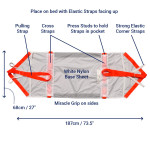
- Long pulling straps at each end, sewn part-way down the length to allow additional rescuers
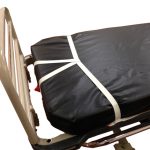
- Press studs and pockets for cross straps to help secure straps and prevent entanglement with bed rails
- Plastic buckles for safer release under load and reduced risk of damage to washing machines
- Cross straps sewn across the full width for added strength, suitable for evacuation over rough surfaces such as tarmac, bitumen, and concrete
Special Press Studs (Patent Applied For) are fitted to both pulling straps and cross straps. These help keep straps secured in place, reducing the risk of them becoming caught or detached during emergency use. Cross strap press studs also help prevent straps falling between bed rails and the bed base.
Two pieces of Miracle Grip material are sewn to each side at the top and bottom. As some modern hospital beds do not include fixed mattress retention bars, mattresses may be prone to movement. If this product contributes to mattress slippage, use of the Anti Slide Mattress Sticks or Anti Slide Mattress Pad (sold separately) is recommended.
WHO IS THIS PRODUCT SUITABLE FOR?
Suitable for individuals who may be unable to evacuate quickly due to disability, frailty, medication effects, or post-operative recovery.
BRIEF INSTRUCTIONS FOR USE
The orange cross straps identify this as a narrower version of the ResQsheet range. The elastic sections fit securely over both ends of the mattress, regardless of shape variation.
Install the ResQsheet under the mattress with the “This Way Up” label facing upwards. The sheet is symmetrical and can be used in either orientation. Store the folded cross straps in the designated pockets and secure with press studs during bed making.
When required, release the cross straps from the pockets and connect the buckles across the patient and bedding. A pillow may be placed across the chest and legs under the straps for additional comfort and protection.
Tighten the cross straps to secure the patient within the bedding. Remove the head and foot pulling straps from beneath the mattress. Lower the bed fully, then use the pulling straps to assist with lowering the patient and mattress to the floor and moving along evacuation routes.
ResQSheet Extension Straps (sold separately) may be used to increase pulling capacity and allow additional rescuers to assist.
WHAT IS THIS PRODUCT MADE FROM?
Nylon, webbing, plastic buckles, elastic.
Technical
STOCK KEEPING UNIT (SKU)
220T
SIZE
187cm x 68cm / 74″ x 27″
WEIGHT
1.2kg / 2.6lbs
GLOBAL MEDICAL DEVICE NUMBER (GMDN)
37163
GLOBAL TRADE ITEM NUMBER (GTIN)
9349145001697
Cleaning
CLEANING METHOD
Machine or hand wash.
MAXIMUM WASHING TEMPERATURE
80°C / 176°F.
DETERGENT
Use a mild detergent. Do not use fabric softener.
DRYING METHOD
Air dry in the shade. Alternatively, tumble dry on a cool temperature and make sure the drum is cool.
CLEANING WARNING
Only use and store the product when it is dry.
Important
Safe Working Load (SWL): 300kg / 660lbs
Note: There is no Standard for this product, therefore we have adopted the testing requirements as set out in International Standard ISO 10535:2011: Hoists for the transfer of disabled persons – Requirements and test methods. This Standard covers testing for mechanical lifting hoists and associated lifting slings. It includes a method for obtaining a SWL for a lifting sling which lifts a person’s entire weight, which Pelican’s range of slings adhere to. We use the same materials, thread and method of stitching our slings, as we do for the ResQ products. An important difference is that the ResQ products are designed to be slid, not lifted, so the SWL stated above could theoretically be increased. Because people’s weight and size may be distributed differently between the chest, stomach and legs, it may be possible that the cross straps do not fit some bariatric people. If possible, we recommend this is tested before an emergency occurs. If this is the case, please contact us as we may be able to supply extension cross straps.
Note for Trainers: This product may not be suitable for use on some circular staircases. Ensure all doorways are wide enough to allow this product to pass through. Allow caution when turning corners fast as a high lateral force may make the product roll over, although we are not aware of this ever happening. If evacuating a large Bariatric person, it may be necessary to have more than one person pulling. It is good to have the total weight of the people pulling, near to or equal to the weight of the evacuee. Also using the Pelican Extension Straps, SKU 220E will lengthen the Pulling straps so more people can hold the straps without being too close to each other. Remember more rescuers will be needed to hold the weight back when descending stairs.
General Manual Handling Warning: Manual Handling products are designed to assist carers to help patients. They will not make the carer stronger or fitter, but with correct training and use of the products, should make manual handling easier and safer for both staff and patients. When training, practise with an able-bodied colleague. If any procedure is not comfortable or is difficult and puts the carer or patient in a dangerous position, the participants should call out to stop the manoeuvre, recover and recommence. Never jeopardise your health by straining, twisting or being incorrectly positioned when manual handling. Always select the most appropriate equipment for the patient’s current condition and if in doubt, use mechanical equipment. Ask your Manual Handling adviser for individual guidance.
Correct Buckle Threading: Click here to view a video showing the correct way to thread a buckle onto the webbing. It is vital that the buckles on this product are correctly fitted. Contact us if you need to order a replacement buckle if one is broken.
Alternative & Related Products

ResQmat
Evacuation mat - helps evacuate from building.
AUD $470.00 + 10% US Tariff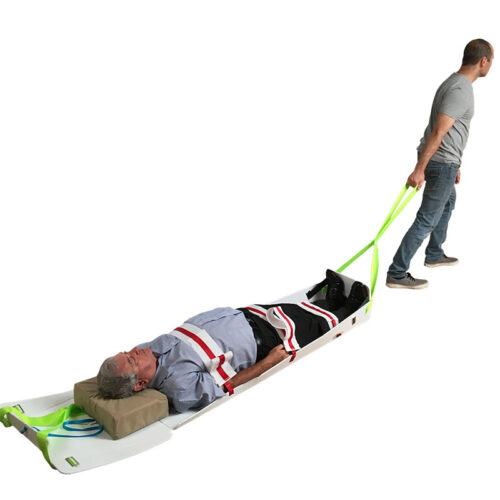

ResQme
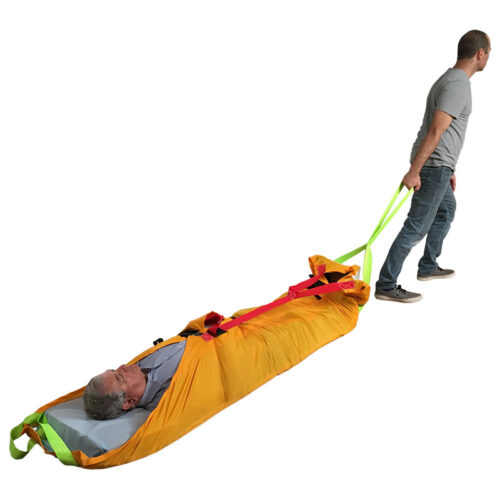
Helps evacuate from a building, including going down stairs.
AUD $305.00 + 10% US Tariff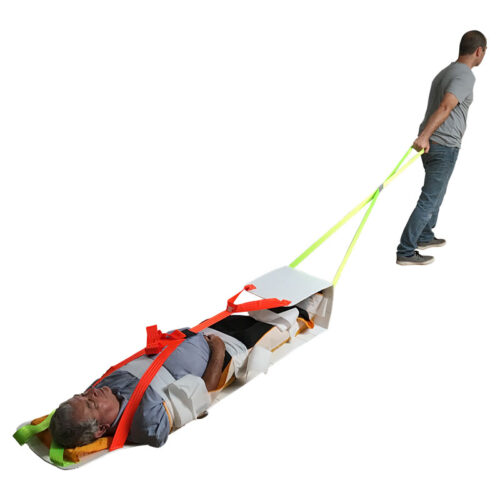

ResQpod
Evacuation mat - helps evacuate from building.
AUD $316.00 + 10% US Tariff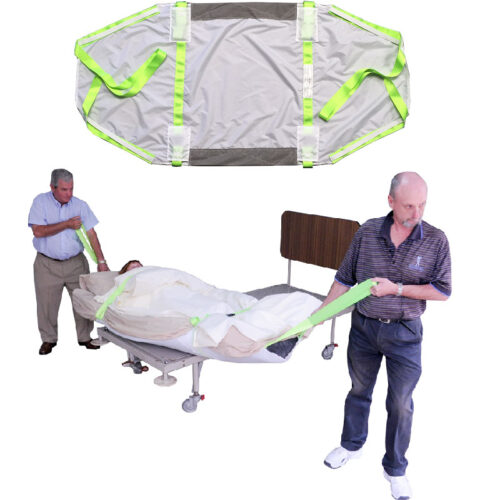

ResQsheet
For people who cannot quickly evacuate in an emergency.
AUD $137.00 + 10% US Tariff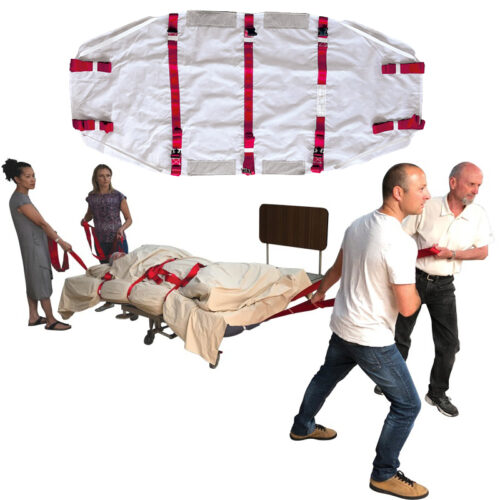
ResQsheet – Bariatric Size
For people who cannot quickly evacuate in an emergency.
AUD $277.00 + 10% US Tariff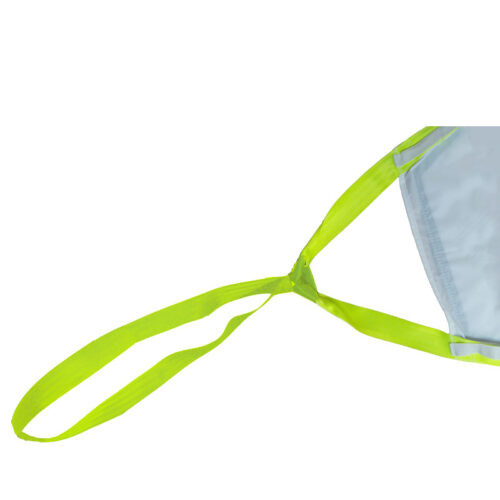

ResQsheet Extension Straps
For ResQ evacuation products to make towing straps longer.
AUD $32.00 + 10% US Tariff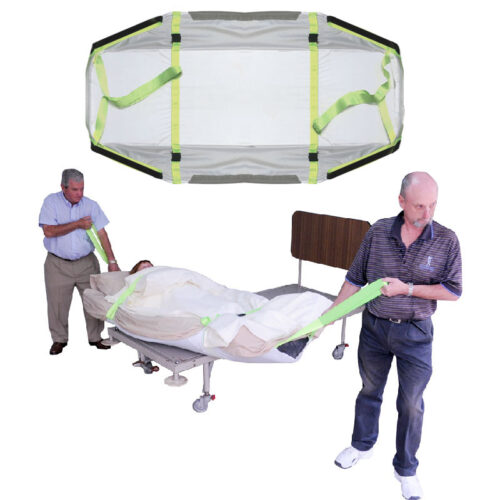

ResQsheet for Vinyl & Carpet – Deep & Airflow
For standard single, king single size and airflow mattresses.
AUD $220.00 + 10% US Tariff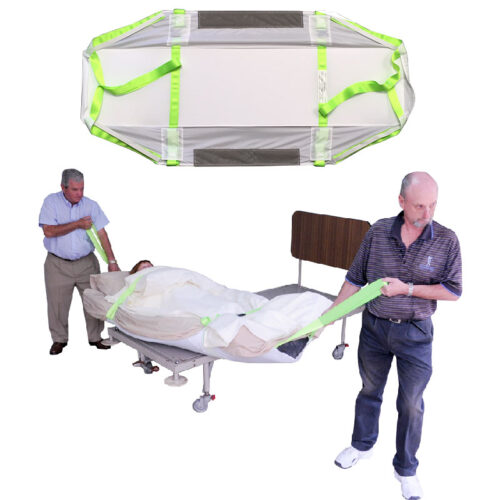

ResQsheet for Vinyl & Carpet
For people who cannot quickly evacuate in an emergency.
AUD $210.00 + 10% US Tariff