


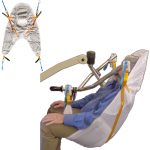
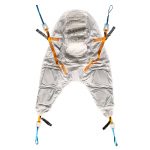
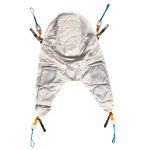


Description
WHAT IS THIS PRODUCT?
Main Features
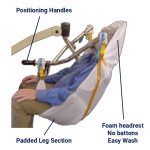
- Full body keyhole plate sling
- Split legs
- Built-in keyhole plate safety straps
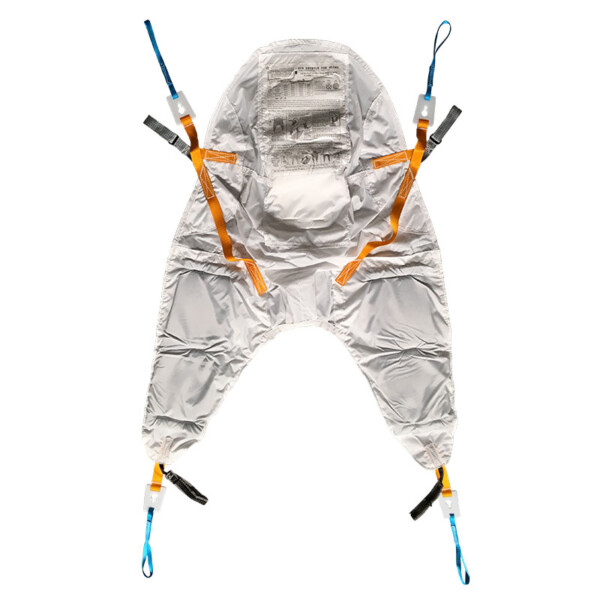
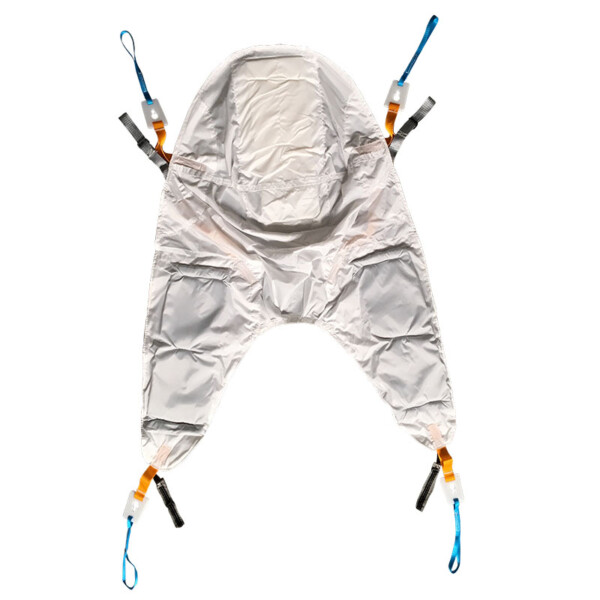
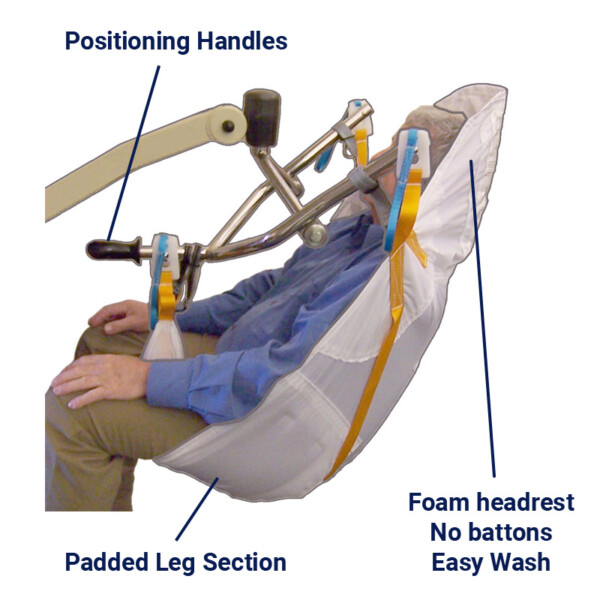
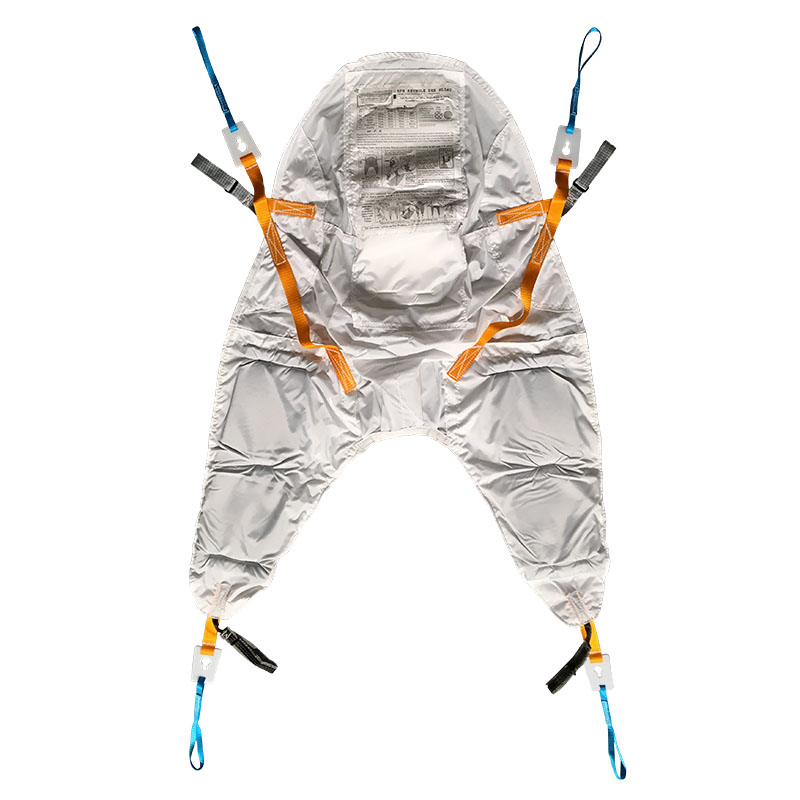
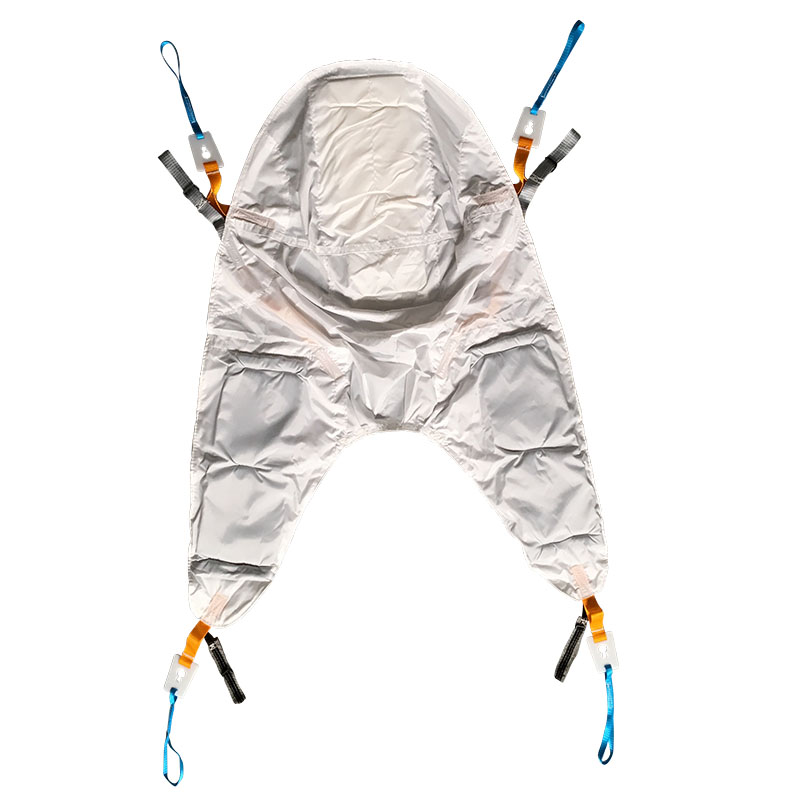
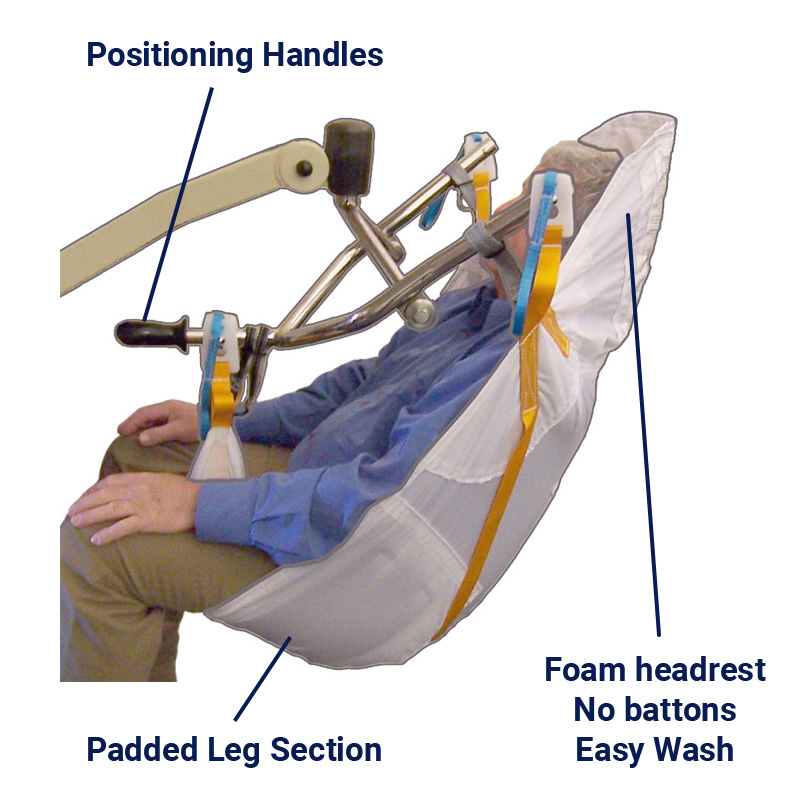
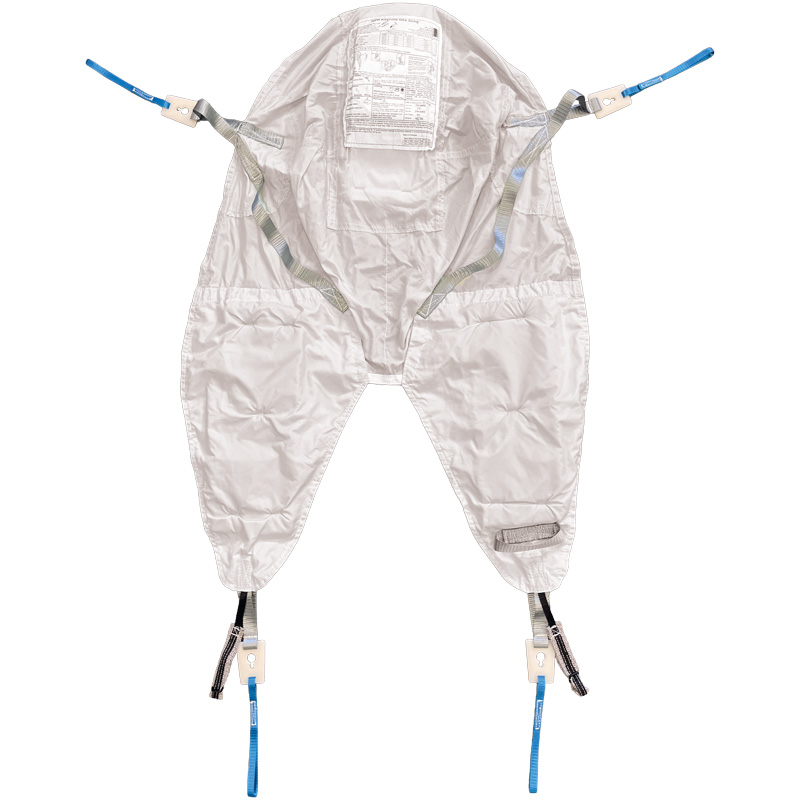
The RPH Keyhole Dex Sling is a full body keyhole plate sling. It has head support with split leg sections to allow easier fitting, and is available in a variety of materials (see the Technical tab).
This sling comes with keyhole plates to fit onto tilt frame hoists that have ‘mushroom’ studs for attachment.
We incorporate special safety straps with our keyhole plate slings as an extra safety measure. These may help prevent the patient from falling to the floor if a keyhole plate comes off the stud or breaks, and can help prevent a serious accident. Click on the image for further information.
Click here to view the full range of Hoist Slings.
Sling & Hoist Compatibility: Click here for more information.
WHO IS THIS PRODUCT SUITABLE FOR?
This product is suitable for a sling user who uses a keyhole plate type hoist or lifter and requires head support.
BRIEF INSTRUCTIONS FOR USE
Place the sling behind the patient’s back, with the stitching on the lower centre of the sling, parallel to the patient’s spine.
Tuck the bottom of the sling under the coccyx area.
Lift the patient’s legs to place the leg sections under each leg.
The safety strap should be placed on the tilt frame before attaching the keyhole plate.
Move the sliders to keep the straps in position.
Connect the leg section keyhole plates to the ‘mushroom’ studs on the central arm of the tilt frame, then connect the two shoulder keyhole plates.
WHAT IS THIS PRODUCT MADE FROM?
Nylon, webbing, plastic keyhole plates, Miracle Grip on safety straps, foam.
Technical
Safe Working Load: 220kg / 485lbs (In accordance with ISO 10535:2011)
ARTG: 99879
GMDN: 40535
Attachment Method: Keyhole plate tilt frame hoist
Sizes: 
| SKU # | Size | Height | Shoulder Width | Hip Width | Webbing Colour |
| 771X | Extra Small | 73cm / 28.5″ | 42cm / 16.5″ | 63cm / 25″ | Brown |
| 771 | Small | 82cm / 28.5″ | 58cm / 23″ | 77cm / 30″ | Red |
| 773 | Medium | 90cm / 35.5″ | 66cm / 26″ | 83cm / 32.5″ | Yellow |
| 770 | Large | 90cm / 35.5″ | 86cm / 34″ | 94cm / 35.5″ | Green |
| 772 | Extra Large | 106cm / 41.5″ | 94cm / 37″ | 114cm / 45″ | Blue |
Special sizes made on request.
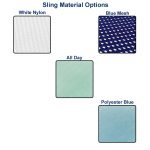
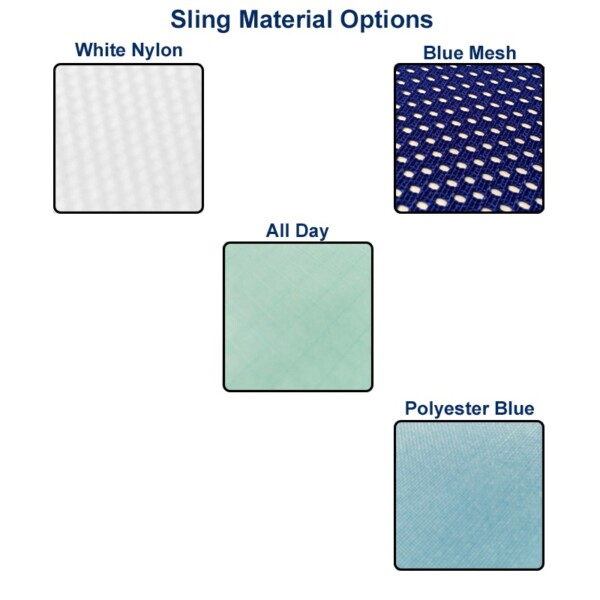
Materials Available:
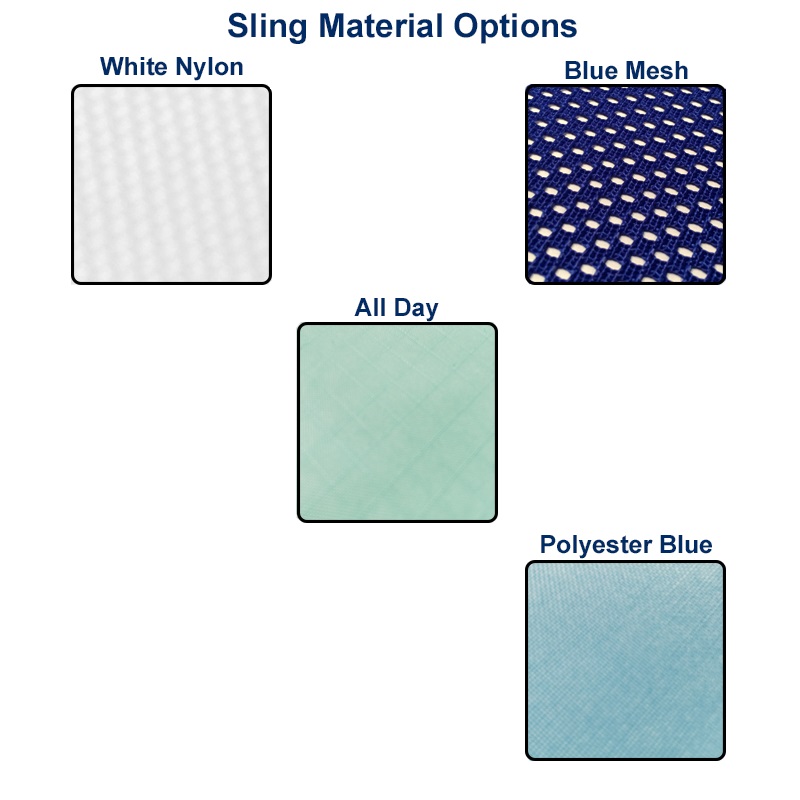
| Material | Photo | Type | Notes |
| Standard White |  |
Nylon | This is called a solid material, as it is not a Mesh or Netting material that has holes in the material. The nylon has some slipperiness, to make it easier to slide down behind a patient’s back, when they are sitting in a chair. |
| Blue Mesh |  |
Polyester | This is a soft and comfortable Mesh with small holes. The holes can be cooler for the patient. Sometimes this material will be used for showering or in a bath. |
| Polyester Blue |  |
Polyester | A comfortable, solid material, like the nylon material, but not as slippery. |
| All Day Sling Material |  |
Nylon | A strong, thin material with a Rip Stop thread in the material, to help reduce or prevent ripping. As the material is breathable the Slings can be left under the patients sitting in chairs. This reduces the need to remove the Sling after the patient has been hoisted into a chair, and then replace the Sling to pick them up again. |
Please select the most appropriate material and sling design for the patient, but remember, if the patient’s condition changes, it may be necessary to use a different material and design of sling. See the FAQ tab for more information.
Cleaning
CLEANING METHOD – SEWN VERSION
Machine or hand wash .We recommend using a Pelican Washing Bag to help contain the product.
MAXIMUM WASHING TEMPERATURE
80°C / 176°F.
DETERGENT
Use a mild detergent. Do not use fabric softener. Fabric softener and excessive chlorine or bleach can damage any material, including Sling material. Slings should be continuously inspected for deterioration and discolouration, as this may be an early warning of possible failure.
DRYING METHOD
Air dry in the shade. Alternatively, tumble dry on a cool temperature and make sure the drum is cool.
CLEANING WARNING
Only use and store the product when it is dry.
Important
Attaching Brand New Keyhole Plate Slings to a Hoist: View our video guidance here.
General Keyhole Plate Sling Information: Click here for general information, including filing down Keyhole Plates which are too tight. This advice is applicable for the version of this product which uses Keyhole Plates.
Warning: Inspect slings before every use. If any damage is found the Sling must be withdrawn from service and repaired, if possible.
Warning: If you are leaving a sling made in the All Day Sling material under a person, always ensure that there will be no adverse pressure care issues. This includes checking that the attachment method (e.g. webbing loops, keyhole plates, etc.), are not positioned in such a way that may hurt the person. The actual material is very thin and it should not cause a pressure problem, but patient’s skin integrity should be regularly checked, just in case the sling is causing a pressure problem. If there are any early signs of pressure problems, discontinue using this design of sling.
Disposal: When the Sling is ready for disposal, we suggest the Lifting straps are cut off, so it cannot be used with another patient.
Sling & Hoist Compatibility: Click here for more information.
Sling Life Expectancy: Click here for more information.
What the International Standard ISO 10535:2011 requires for Period Sling Inspections and Sling Labelling: Click here for more information.
Sling Inspection Before Use Checklist: Click here to download.
6 Monthly Thorough Sling Inspection Checklist: Click here to download.
Online Sling Inspection Training: For excellent guidance on how to do inspections, check out this course on the Udemy learning platform. On completion of the course you will receive a certificate, which makes staff education simple. This training is in addition to the training offered by your organisation. The course covers:
- How the do a Sling Inspection Before Use
- How to do a 6 Monthly Thorough Sling Inspection
- What the labelling requirements are
- Example of sling damage
- How to safely mark a sling
FAQ's
Do I need to do Sling inspections?
Yes – see the Important Information tab for more information.
What are the Sling inspection requirements?
See the Important Information tab for more information. We’ve paraphrased the International Standard 10535:2011 under licence, detailing exactly what is required.
Where can I find the inspection checklists?
See the Important Information tab for more information. We provide the following checklists:
- Sling Inspection Before Use
- 6 Monthly Thorough Sling Inspection
Video
Alternative & Related Products
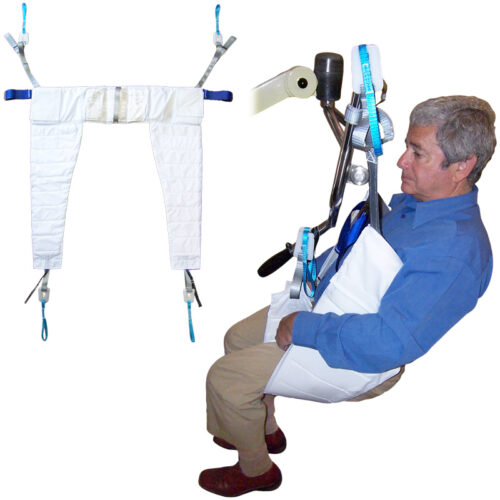

Bodex Sling
Quick to fit easy to remove keyhole plate toileting sling.
From AUD $544.00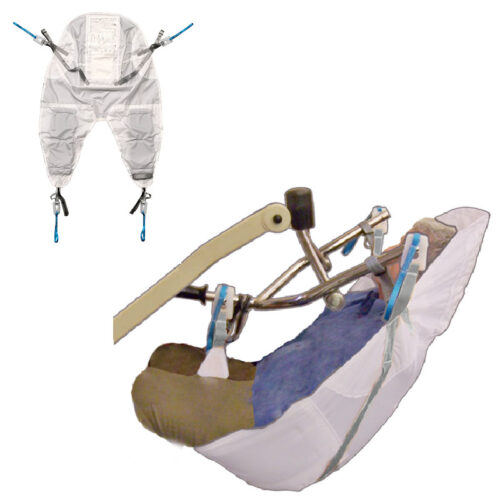
RPH Keyhole Double Amputee Sling
A full-body, padded, split leg sling.
From AUD $549.00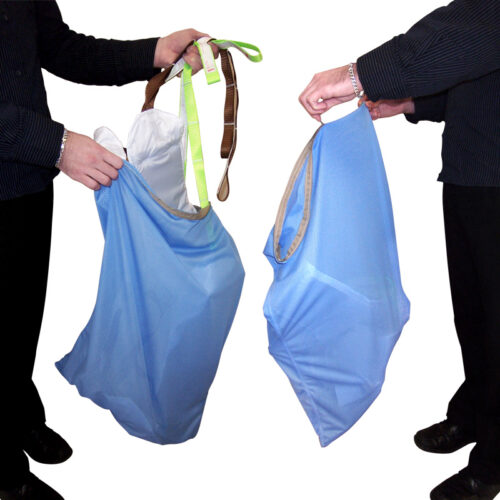
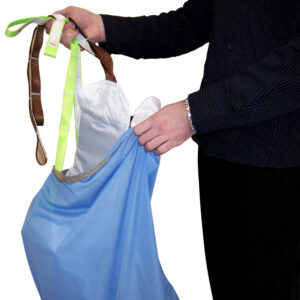
Washing Bag
Great for machine washing products with straps.
AUD $61.00 + 10% US Tariff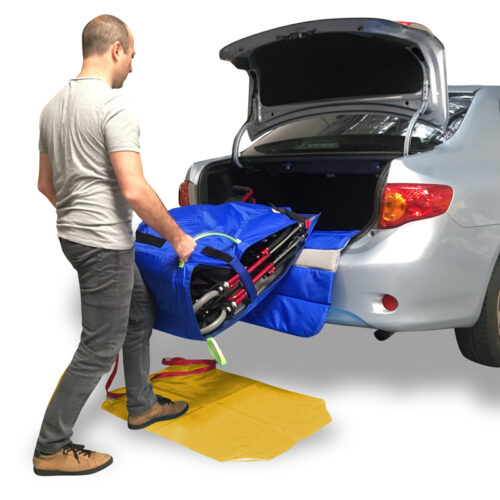

Wheelchair Boot Slider
Helps lift a wheelchair in and out of a car.
AUD $538.00 + 10% US Tariff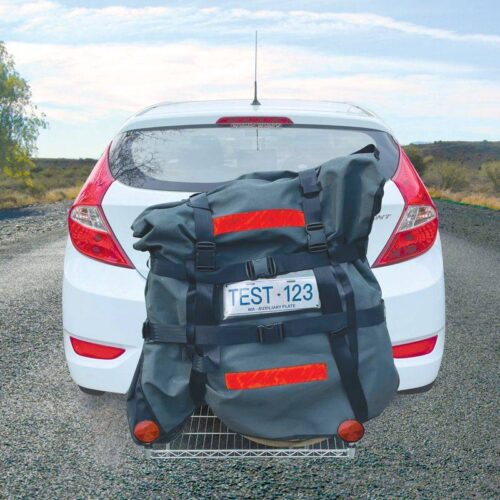

Wheelchair Car Carrier Cover
Protect a wheelchair when it is on car carrier.
AUD $341.00 + 10% US Tariff